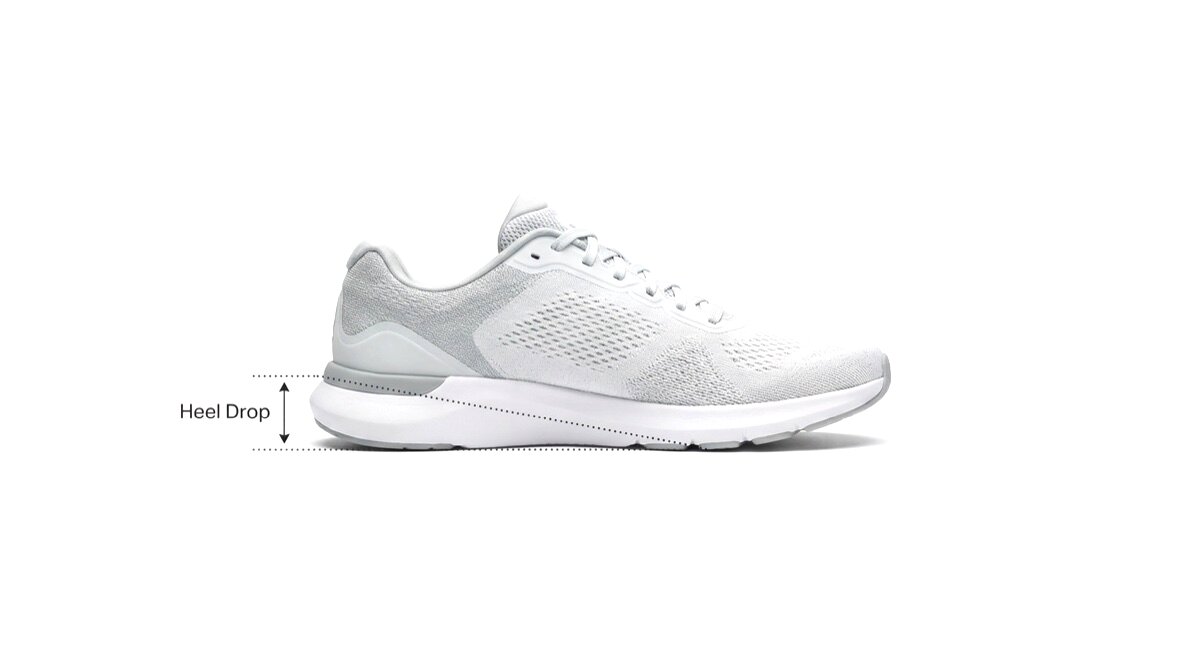
Heel Drop in Running Shoes
I've been running for about 10 years now, ever since I moved to Portland to work at Nike. I don't work there anymore but I still run. One thing I didn't know about when I started shopping for running shoes is heel drop... the difference in height between the heel and the forefoot. It's a small number that makes a big difference in how a shoe feels.
What Is Heel Drop?
Heel drop (or heel-to-toe offset) measures how much higher the heel sits compared to the forefoot:
- High drop (10-12mm) — Traditional running shoes. Promotes heel striking with more cushioning in the back.
- Mid drop (5-8mm) — A balance between heel and forefoot cushioning.
- Low drop (0-4mm) — Encourages a more natural foot strike.
- Zero drop (0mm) — Heel and forefoot are level, like running barefoot.
Why I Started Paying Attention
As I've gotten older I've been struggling to find shoes that really work for me. I tried high-drop shoes and they caused knee pain... not great when you're trying to stay active and keep running for years to come. That sent me down the research rabbit hole.
Lower-drop shoes shift some of the impact away from your knees and distribute it to your calves and ankles. There's research backing this up... Bonacci et al. (2013) found that higher-drop shoes were linked to increased patellofemoral stress, which is a key factor in runner's knee. For me it wasn't academic, I could feel the difference.
A lower drop also encourages midfoot or forefoot striking instead of heel striking. It's closer to how you'd naturally run barefoot. You engage your foot muscles, Achilles tendons, and calves more actively which builds strength over time. Better ground feel, better balance, better proprioception on trails.
The Transition
If you're switching from high-drop shoes don't just buy zero-drop shoes and go run 10 miles. Your calves will not forgive you. Start with shorter runs and work your way up. Calf raises help. Rotating between different drops helps too. Listen to your body... soreness is normal but sharp pain means slow down.
What I'm Running In
I went through a few iterations on this. For a while I was in Altra Lone Peaks on the trails (zero drop) and Hoka Cliftons on the road (5mm drop). Both solid choices.
Since then I've landed on a lower drop shoe around 5mm... the On Cloud. They've been working really well for me. No knee pain, comfortable for longer runs, and they just feel right.
Should You Go Lower?
Zero drop isn't for everyone. If you have stiff ankles, past Achilles injuries, or calf issues you might prefer a slight drop in the 4-6mm range. The point isn't to get to zero... it's to find what works for your body.
If you're dealing with knee pain in your current shoes it's worth trying something with a lower drop. It made a real difference for me.
References
- Bonacci, J., et al. (2013). Running in a minimalist shoe increases plantar pressure without modifying running biomechanics. Medicine & Science in Sports & Exercise, 45(7), 1342-1350.
- Paquette, M. R., et al. (2013). Ground reaction forces and lower extremity biomechanics with different speeds in traditional versus minimalist running shoes. Journal of Biomechanics, 46(7), 1275-1282.
- Willy, R. W., & Davis, I. S. (2014). Kinematic and kinetic comparison of running in standard and minimalist shoes. Journal of Sports Sciences, 32(13), 1277-1285.